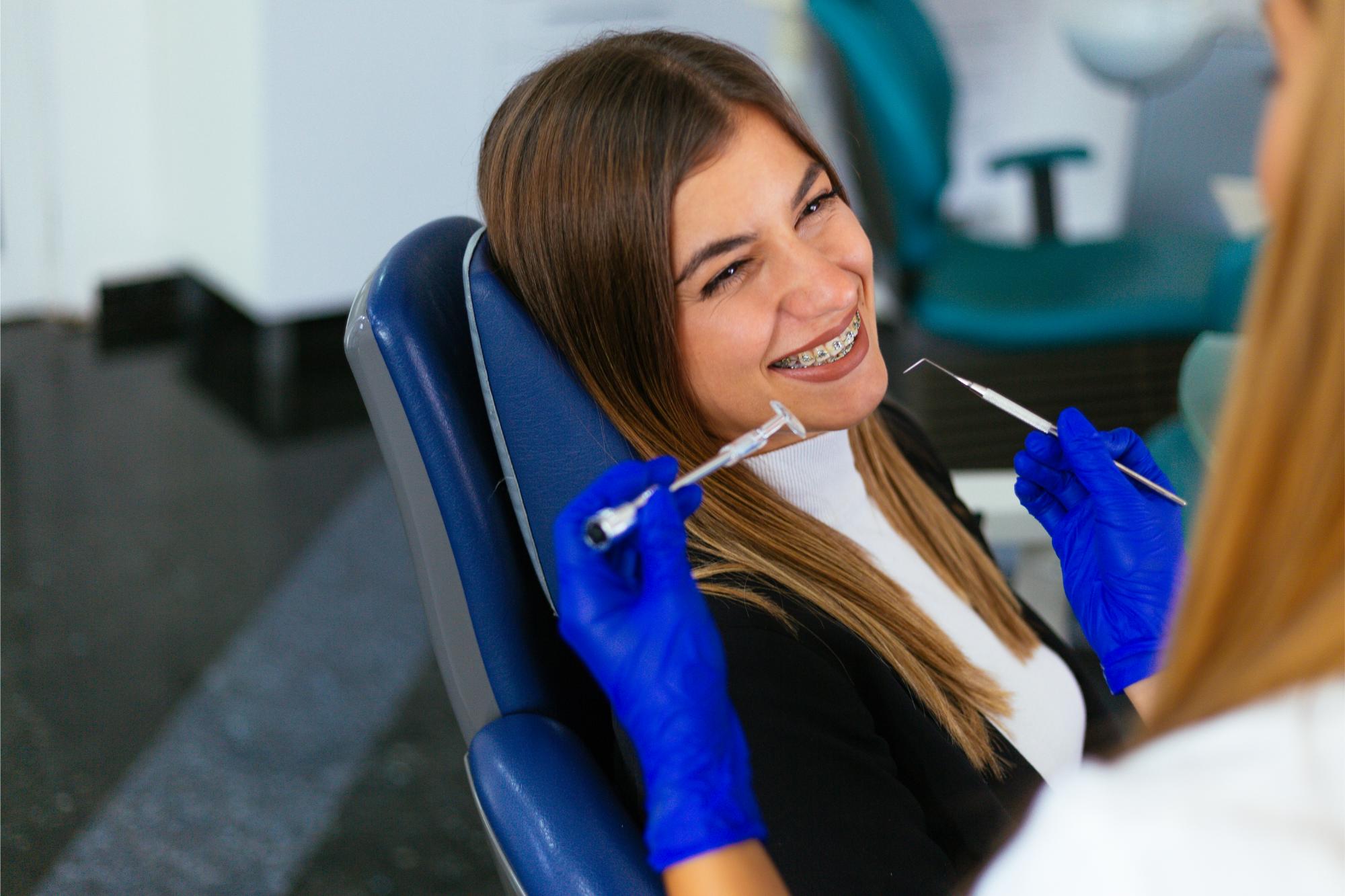

Thinking about braces but wondering if you’ve missed your window? You haven’t. More adults than ever are choosing to straighten their teeth, and today’s options fit right into a busy professional life. Here’s what you need to know before you start.

What Are Adult Braces?
Adult braces are bracket-and-wire systems (or clear aligners) used to straighten teeth and correct bite issues in people past their teen years. The mechanics are the same as teen treatment, small brackets bonded to each tooth, connected by a wire that gently guides teeth into place over time. What changes with adults is the planning around existing dental work, denser jawbone, and lifestyle.
According to the American Association of Orthodontists, roughly 1 in 4 orthodontic patients today is an adult. That number keeps climbing as options get more discreet and treatment fits more easily into work and family schedules.
At Hoffman Orthodontics, Dr. Hoffman offers both metal and clear braces for adults, plus Invisalign. Every case starts with an honest look at your teeth, gums, and goals, no one-size-fits-all recommendations.
Age isn’t a barrier. As long as your gums are healthy and your bone structure supports movement, you’re a candidate. Adults in their 30s, 50s, and 70s all achieve beautiful, lasting results with the right custom solutions.
How Adult Braces Work: The Treatment Process
Adult treatment follows a clear path from first visit to final smile. Here’s what to expect:
- Free consultation and imaging. Your first visit at Hoffman Orthodontics includes an exam, a single, low-radiation 3D scan, and photos. Dr. Hoffman reviews everything with you in plain language, no funny-sounding “doctor talk”, and builds a custom treatment plan. Prefer to start from home? A virtual consult is available too.
- Pre-treatment prep. Before brackets go on, any cavities need filling, gums need to be healthy, and existing crowns or bridges get evaluated. This step protects your investment and keeps treatment on schedule.
- Bracket placement visit. Bonding day usually takes one to two hours. Dr. Hoffman places each bracket, threads the first wire, and walks you through care instructions before you leave.
- Adjustments every 4-8 weeks. Short check-in visits keep your teeth moving in the right direction. Wires are changed, progress is measured, and any questions you have get answered.
- Debonding and retainers. When your smile transformation is complete, brackets come off in a single visit. Retainers hold your new smile in place while the bone stabilizes around it.
Adult treatment can take a little longer than teen treatment because adult bone is denser and remodels more slowly. Most adult cases run 18 to 30 months, though simpler cases finish sooner.
Benefits of Getting Braces as an Adult
Straight teeth do more than look good. Here’s what adult treatment can deliver:
- Confidence at work and in social settings. A straight, healthy smile shows up in every meeting, every photo, every first impression. Adults often say the confidence boost is the biggest surprise.
- Better bite alignment. A balanced bite reduces strain on your jaw joints, which can ease TMJ discomfort, morning jaw stiffness, and uneven tooth wear.
- Easier brushing and flossing. Crowded or overlapping teeth trap plaque. Straight teeth are simpler to clean, which lowers your long-term risk of cavities and gum disease.
- Correction of shifting that happened after childhood. Teeth move throughout life. Many adults who had braces as teens see crowding return, and adult treatment resets things without starting from scratch.
- Airway and sleep improvements. Bite and jaw position can affect how well you breathe at night. Hoffman Orthodontics offers airway treatment as part of a broader approach, helping some adults breathe better and sleep more soundly.
- A lifetime of results. With consistent retainer wear, the results from adult treatment last. It’s one of the highest-value investments you can make in your long-term health.
You’re not just here for a new smile, you’re here for real solutions for real people. That includes function, health, and how you feel every day.

Types of Braces for Adults: Metal vs. Clear vs. Invisalign
Three main options work well for adults. Each has trade-offs around visibility and case complexity.
| Feature | Metal Braces | Clear Braces | Invisalign |
|---|---|---|---|
| Visibility | Most noticeable | Blends with tooth color | Nearly invisible |
| Best for | Complex cases | Moderate to complex cases | Mild to moderate cases |
| Treatment time | 18-24 months (typical) | 18-30 months (typical) | 12-24 months (typical) |
| Removable | No | No | Yes (22 hrs/day wear) |
| Food restrictions | Yes | Yes | No (removed to eat) |
Metal braces using the Damon self-ligating system are efficient, reliable, and often the best pick for complex bite corrections. They’re the most visible option but deliver strong results.
Damon clear braces use tooth-colored brackets that blend in with your natural smile. They’re a great middle ground for adults who want stealthy treatment without giving up the predictability of brackets and wires.
Invisalign uses a series of custom, removable aligners. It’s the most low-key look, high-impact results option, especially for adults with mild to moderate crowding or spacing. You take them out to eat and brush, which many adults appreciate.
Lifestyle matters here. If you present in front of clients daily, clear braces or Invisalign may be worth considering. Dr. Hoffman helps you weigh what fits your life best during your free consult.
Are You a Good Candidate for Adult Braces?
Most healthy adults are candidates. The key requirements are healthy gums and enough bone to support tooth movement. Here’s how Dr. Hoffman evaluates candidacy:
- Healthy gums and bone. Your gums need to be free of active infection, and your jawbone needs enough density to hold teeth as they shift.
- Existing dental work. Crowns, bridges, and implants don’t disqualify you, but they change the plan. Implants don’t move, so they’re treated as fixed anchor points.
- Untreated cavities or gum disease. These need to be resolved before brackets go on. Your general dentist and Dr. Hoffman coordinate on this.
- Good candidates for braces: adults with crowding, spacing, overbite, underbite, crossbite, or teeth that shifted after childhood treatment.
- Disqualifiers: severe, uncontrolled periodontal disease or significant bone loss. Even then, some cases can move forward once gum health is stabilized.
The only way to know for sure is a proper exam. A free consult with Dr. Nathan Hoffman includes everything you need to make an informed decision.

Frequently Asked Questions About Adult Braces
What are the downsides of braces as an adult?
The main trade-offs are visibility (with metal brackets), a learning curve for keeping brackets and wires clean, and treatment time that’s often slightly longer than teen treatment. Most adults adjust within a couple of weeks and find the daily routine manageable. Clear braces and Invisalign help with the visibility concern if that’s a priority.
What disqualifies you from getting braces?
Active, untreated gum disease and significant bone loss are the main disqualifiers. If your gums are inflamed or your jawbone can’t support tooth movement, treatment needs to wait until those issues are addressed. In many cases, working with your general dentist to stabilize gum health opens the door to starting braces later.
What should I not do on the first day of braces?
Skip hard, crunchy, or sticky foods for the first several days while your teeth adjust. Stick to soft foods like pasta, eggs, yogurt, and soup. Use the orthodontic wax Dr. Hoffman provides if any brackets rub against your cheeks or lips, it makes a big difference in comfort during that first week.
How long do adult braces take compared to teens?
Adult treatment typically runs 18 to 30 months, while teen treatment often finishes in 12 to 24 months. The difference comes down to bone density, adult bone remodels more slowly than growing bone. Simpler adult cases can still wrap up in about a year.
Can I get braces if I have crowns or dental implants?
Yes. Crowns work fine with braces using specialized bonding techniques. Implants don’t move because they’re fused to bone, so Dr. Hoffman plans treatment around them as fixed points. This kind of planning is exactly why an experienced orthodontist matters for adult cases.
Am I too old for braces?
No. There’s no upper age limit for orthodontic treatment. As long as your teeth and gums are healthy, braces work at 25, 55, or 75. Hoffman Orthodontics regularly treats adults across every stage of life who want the look you want and the results you deserve.
Ready to see what’s possible for your smile? Dr. Nathan Hoffman and our team at Hoffman Orthodontics offer honest, hospitable orthodontics for adults across Mooresville, Lake Norman, and Iredell County. Schedule your free consult to explore your options, all smiles, zero hassle.