
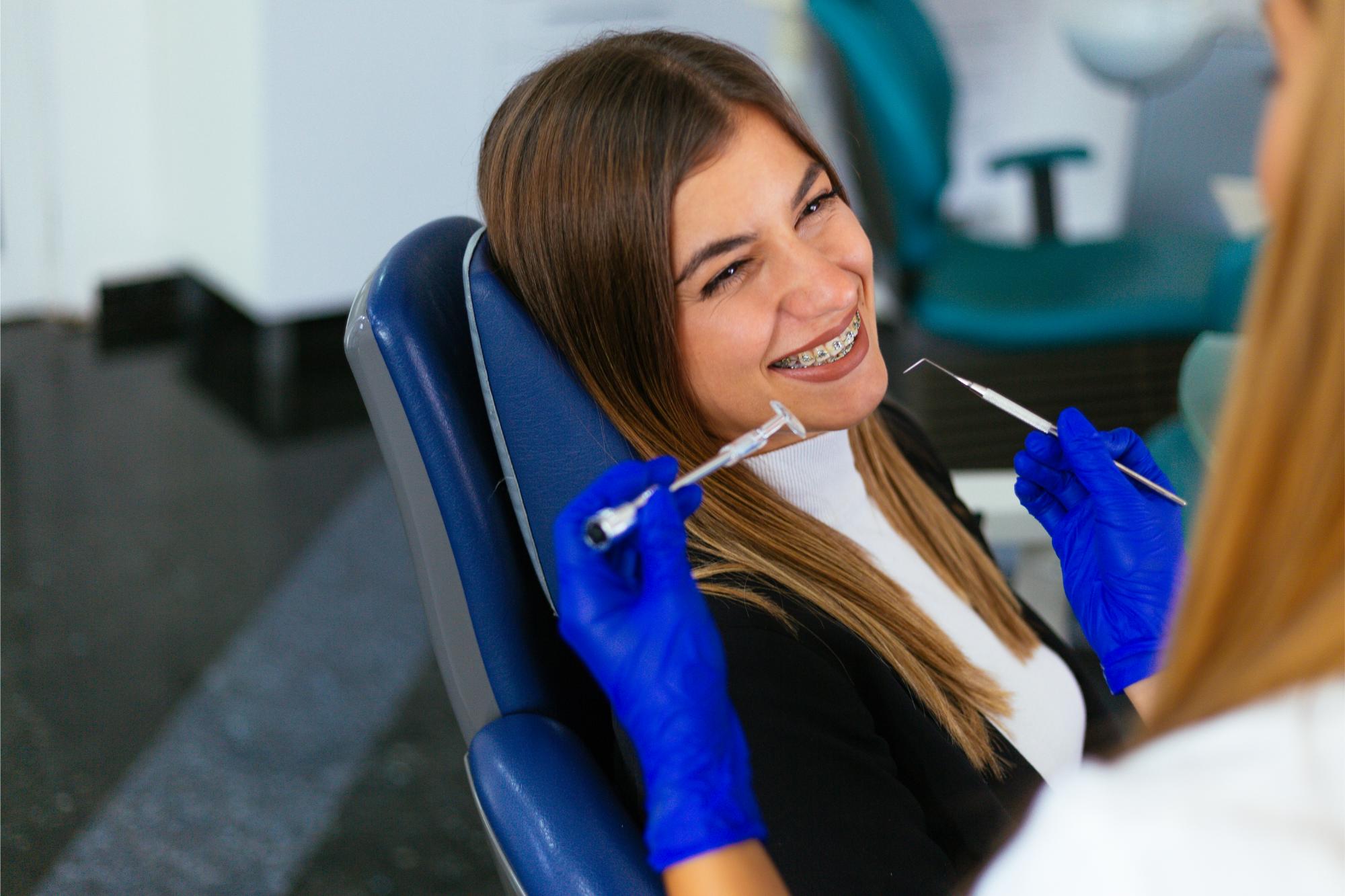
Choosing between metal and clear braces is one of the first big decisions you’ll make when you’re ready for a smile transformation. Both work. Both deliver beautiful, lasting results. The right pick comes down to how the braces look, how they fit your life, and what your teeth actually need.
Here’s a straightforward look at both options, so you can walk into your free consult with Hoffman Orthodontics feeling ready.

Metal vs. Clear Braces: What’s the Difference?
Metal braces use small stainless steel brackets bonded to each tooth and connected by a thin archwire. Clear braces (also called ceramic braces) work the same way, but the brackets are made of tooth-colored ceramic that blends with your enamel for a stealthy look. Both stay on your teeth throughout treatment and gently guide them into place.
Neither option is removable like Invisalign. Once bonded, they stay put for the full treatment window, typically 18-24 months for the average case. That fixed, always-working design is part of why braces remain such a reliable choice for a wide range of smiles.
A quick note: today’s metal brackets look nothing like the chunky hardware you may remember. Modern brackets, including the Damon self-ligating braces Dr. Hoffman uses, are smaller, smoother, and far more comfortable than older generations. Clear ceramic brackets follow that same low-profile design with a tooth-colored twist.
How Metal and Clear Braces Move Teeth
Both metal and clear braces move teeth through steady, controlled pressure. The mechanics are identical; only the bracket material changes. Here’s what the process looks like from start to finish:
- Free consult and records. Dr. Hoffman reviews your smile, takes a single, low-radiation 3D scan, and maps out custom solutions built around your goals.
- Bonding visit. Each bracket is placed on the front of your tooth with a safe dental adhesive. The archwire is then threaded through the brackets and secured.
- Gentle, continuous force. The archwire applies a light, steady pressure that guides your teeth toward their planned positions over time.
- Adjustment visits every 4-8 weeks. Dr. Hoffman and our team change or upgrade the wire, check progress, and fine-tune the plan as your smile shifts.
- Debonding day. Once your teeth are in their final positions, the brackets come off and your enamel is polished smooth.
- Retainers. A custom retainer holds your new smile in place so it stays put for the long haul.
Clear ceramic braces follow this exact same sequence. The only visible difference during your visits is the color of the brackets and, sometimes, the color of the tiny elastic ties that hold the wire in place.
Benefits of Metal Braces vs. Clear Braces
Each option has real strengths. Here’s what stands out about both.
Metal braces:
- Extremely durable. Stainless steel brackets rarely chip or break, even with active lifestyles.
- Efficient for complex cases. When teeth need major rotation or big bite corrections, metal handles the work reliably.
- Fun for kids and teens. Colored elastic bands let younger patients switch up their look at every visit, from school colors to holiday themes.
- Low maintenance. Metal doesn’t stain, so foods and drinks don’t change how the brackets look.
Clear braces:
- Discreet appearance. Ceramic brackets blend with your natural tooth color for a low-key look that photographs beautifully.
- Great for adults and professionals. If you’re in a client-facing role or just prefer subtle hardware, clear braces let you show off your smile through treatment.
- Same reliable mechanics. You get the proven bracket-and-wire system with a more aesthetic finish.
- Comfortable design. Ceramic brackets often have smoother, more rounded edges that feel gentle against your lips and cheeks.
- Confidence-friendly for teens. Older teens who feel self-conscious about hardware often love the stealthy look.
Both options deliver the results you deserve. The right fit depends on how much visibility matters to you and what your case calls for.

Metal vs. Clear Braces: Side-by-Side Comparison
Here’s how the two options stack up on the factors most people ask about at Hoffman Orthodontics:
| Factor | Metal Braces | Clear (Ceramic) Braces |
|---|---|---|
| Appearance | Highly visible silver brackets | Tooth-colored, blends with enamel |
| Durability | Very tough, rarely breaks | Slightly more fragile than metal |
| Staining risk | Brackets don’t stain | Elastic ties can discolor from coffee, tea, or curry |
| Treatment time | Comparable to clear; may be slightly faster in complex cases | Comparable to metal for most cases |
| Comfort | Smooth, low-profile modern design | Often rounded edges for a barely-there feel |
| Best for | Kids, teens, athletes, complex bites | Adults, image-conscious teens, mild to moderate cases |
Use this side-by-side as a starting point, then bring your questions to your free consult so Dr. Hoffman can weigh in on what fits your teeth and lifestyle best.
Who Should Choose Metal vs. Clear Braces?
The right choice usually lines up with your age, your lifestyle, and what your teeth need. Here’s a quick guide.
Metal braces are often the best fit if you:
- Have complex bite issues or major rotations to correct
- Are a teen or younger patient who wants colorful band options
- Play contact sports or lead an active lifestyle
- Prefer the toughest, most break-resistant hardware
Clear braces are often the best fit if you:
- Are an adult or professional who wants a discreet look
- Have mild to moderate crowding or spacing
- Feel self-conscious about visible hardware
- Prefer smoother, more rounded bracket edges
- Are willing to be mindful with staining foods and drinks
Some patients fall clearly into one camp. Others could go either way. If your teeth need serious work, metal may finish the job more efficiently. If aesthetics top your list and your case is straightforward, clear ceramic is a strong pick. A free consult confirms which option fits your smile and your life.

Frequently Asked Questions About Metal vs. Clear Braces
Is it better to get clear or metal braces?
Neither is universally better; the right choice depends on your case and how much visibility you want during treatment. Metal braces are more durable, while clear braces are more discreet and popular with adults. Dr. Hoffman can help you decide at your free consult.
What’s the most uncomfortable type of braces?
Most people feel similar mild soreness with either metal or clear braces, especially in the first few days after bonding and after each adjustment. Modern brackets, including the Damon self-ligating braces used at Hoffman Orthodontics, are designed to feel smoother and gentler than older systems. Any tenderness usually fades within a few days.
Do clear braces stain?
The ceramic brackets themselves resist staining, but the tiny elastic ties that hold the wire in place can discolor from coffee, tea, red wine, curry, and other deeply pigmented foods. The good news: those ties are swapped at every adjustment visit, so any discoloration is temporary.
How long does treatment take with metal vs. clear braces?
Both options typically take 18-24 months, though your exact timeline depends on how much your teeth need to move. Simple cases may finish sooner, and complex bite corrections may take a bit longer. Dr. Hoffman gives you a personalized estimate at your consult.
Can adults get metal braces?
Absolutely. Braces work at any age, and plenty of adults choose metal for the durability and efficiency. If aesthetics are a bigger priority, clear ceramic braces or Invisalign may be a better match, but metal is a strong option for adults with complex cases.
Ready to see which option fits your smile? Book a free consult with Dr. Nathan Hoffman at Hoffman Orthodontics and get honest, custom answers, all smiles, zero hassle. We’re proud to serve Mooresville, Lake Norman, and Iredell County with real solutions for real people.